Sunday, September 19, 2010

I Don’t Get No Respect!

This seems to be a common refrain I hear from writers, especially those at the beginning of their career. They’ve finally worked up the courage to get serious about writing regularly and some of their closest family and friends won’t respect their time. They get calls during the times they’re writing and attitude if they don’t stop to talk. They hear comments that undermine their newfound confidence.

“You can do that, after all you stay home all day.”

“Oh come on, you’ve got nothing better to do.”

And my favorite. “It’s not like you have a real job.”

So what’s a writer to do?

First, take a deep breath and realize this problem isn’t unique to writers. It happens to everyone who works from home—I should know—my husband and I have shared a home office for the past eleven years. For some people an office isn’t an office if it isn’t off site. Not logical, but an all too common misconception. I’ve fought this battle—sometimes more successfully than others—and these are the strategies I’ve come up with.

  1. Make certain you’re setting the example you want followed. By that I mean keep regular hours. Notice I said regular hours—not to be confused with normal ones. For years I wrote with young children in the house. That meant writing in the afternoons and after they were in bed. Just because you’re working odd hours doesn’t mean you can’t have a schedule.
  2. Treat what you’re doing like you’re serious. If you blow off writing for shopping and lunch several times a week your friends and family won’t understand if you don’t stop for them.
  3. Be consistent. If you’re not accepting calls from your mother-in-law because you’re working, don’t spend the afternoon on the phone with your best friend. Stay focused on your writing. This is even more critical if your time is at a premium. 
  4. Recruit a support team. Instead of adversaries, enlist your friends and family to help you reach your writing goals. Communicate those goals, clearly and frequently. Ask for their help to reach them. After all, what mother doesn’t want to help her baby succeed!
  5. Share your victories. Let those who love you share in the joy of goals accomplished and milestones reached.
These five things have helped me immeasurably over the years. But they’re not a cure all. There will still be those who think what you do is just for fun and not work. Expect that, anticipate it even. Knowing it happens to everyone takes away a little bit of the sting. Most of all, don't let it stand in your way!

Monday, September 13, 2010

INTERVIEW WITH AN EDITOR

Many of our readers will be going to the American Christian Fiction Writers (ACFW) conference this week. Have fun! I hope to see you next year. This year I'm staying home to play grandma.

That also means many of you will be seeing an editor and/or an agent. You will talk with them at the dinner tables, in the hall, during an appointment. It's entirely possible all of your carefully practiced "elevator speeches" will fly out of your head. (It always does mine. I rarely get it in a single sentence and I've still managed to sell more than a dozen books.)

So I thought I would share some of my observations and experiences.
  • Your passion for your story will come through and impress the editor.
  • The editor is more interested in hearing from you than looking at the one sheet.
  • It doesn't hurt to mention why you think this story is a good fit for their company.
  • Bring samples of your writing. They won't take your chapters with them (probably) but they will read and get a sense of your ability to write.
  • Accept rejections with grace.
  • Don't feel you have to leave as soon as they say "no" (although you may). The appointment isn't only a sales pitch; it's also a chance to talk with an industry professional.
  • The fact you are at the conference speaks volumes about you. You are committed to learning and improving. Editors appreciate this; they will be more willing to look at things from you in the future, regardless of what happens this year.
Most of all ... relax. Be yourself. Share your heart. Build a friendship. And leave the results to the Lord.

Sunday, September 5, 2010

Feeling Emotional—Don’t Tell Anyone!

Instead show them.

Telling the story, instead of showing it, is one of the most common mistakes beginners make. During the first draft almost all of us, no matter how advanced, tend to tell a lot of the story. It’s only natural. This is the time when our manuscript comes together and telling allows us to develop the bones or structure of the story before we refine it into a compelling work of fiction. But beginners often stop the refining process too early. So how do we take a story from just bare bones? One of the best ways is to add depth by showing how our characters feel without naming the emotions.

Now, I know a lot of you are probably having the same reaction I did when I first heard it wasn’t a good idea to name an emotion. I had a rather loud conversation with the writing book that first shared this nugget of information.

“You have got to be kidding me! Who made up this stupid rule? How can I tell the reader what’s going on if I don’t use words like scared or angry?”

And there is the crux of the problem—beginning writers always default back to telling the story. Writing fiction is hard work. It takes a lot of time and effort to write a book and write it well. You already know this—after all that’s why you’re taking the time to read and study about how to improve.

Like I mentioned, I didn’t have a positive reaction to my first exposure to this convention. But now it’s an aspect of rewriting that I enjoy and even look forward to. I look on this as a challenge—a game of sorts. The best part of this game is that when I, the author wins, everybody else does too. Am I nuts? Absolutely, but I am, after all, a writer!

Let me give you some examples. I’ll start each out with an excerpt where I name the emotion. Then, in the second, I'll let you see how I changed it to let the reader name the emotion by interpreting the character’s actions.

Example 1
Emotions Named:
She began to cry as shame and anger warred inside. “I didn’t do anything wrong.” Her voice sounded hoarse as she tried to control her frustration.

Emotions Implied:
Tears flooded her eyes, making his features blur as she lifted her head and tried to focus. “I didn’t do anything wrong.” Her voice came out like a croak and she tried to clear her throat, but choked on the unshed tears.

The first excerpt tells the reader what’s going on. Granted, the writing is clear, but we’ve all heard the expression that a picture is worth a thousand words. The second excerpt is that picture. It invites the reader into the action and leaves them to draw their own conclusions.

Here’s another one.

Example 2
Emotions Named:
Manaen rose, her anger giving her strength as she faced her brother. “Do not think to intimidate me.” His arrogance amazed her even as it infuriated her. “I am not a child to be bullied. My Lord’s Spirit speaks to me as clearly as to you.”

Emotions Implied:
Manaen rose in response, her eyes almost even with his as she drew herself up to her full height, oblivious of her feminine garment. “Do not think to intimidate me.” Her jaw worked as she gritted her teeth. “I am not a child to be bullied. My Lord’s Spirit speaks to me as clearly as to you.”

And a final one.

Example 3
Emotions Named:
Rage sent Josiah shooting to his feet. “I tell you, Manaen, I’ve never witnessed any Elder behave in this manner.” Josiah paced, feeling like his world was collapsing. Confusion made him restless. “I just don’t understand.”

Emotions Implied:
He shot up from the desk, upsetting the chair. “I tell you, Manaen, I’ve never witnessed any Elder behave in this manner.” Josiah prowled through the briefing area of their quarters, picking things up and setting them down again. “I just don’t understand.”

Now it’s your turn. Take one of these two sentences and show us the emotion in place of naming it.

Example 1
Susan’s agony flooded through her as sorrow mingled with guilt. “What have I done?”

Example 2
“Hello? Who’s there?” Jenny’s fear reached a crescendo as the footsteps above moved toward the stairs.

I can hardly wait to read what you come up with!

Sunday, August 22, 2010

I've Finished My First Draft - Now What?

I talk with lots of writers who struggle with the editing process. It leaves them feeling overwhelmed and confused. Many are uncertain of where to begin. As a professional editor, I have a specific process I follow, whether I’m working on a client’s manuscript or my own. There are a lot of things to look for in a manuscript and I’ve found that it takes multiple editing passes to catch everything. I take things in small bites—editing no more than a chapter at a time. I also go from the big issues to the small details. Here are the steps I go through when I’m getting a manuscript ready for publication.

First Pass – I make certain that each scene (if there’s more than one per chapter) has strong conflict and is necessary to move the story along. I’m ruthless here—good writing alone NEVER justifies a scene’s inclusion in the finished product.

Second Pass – I check my timeline and the sequence of events. I make sure everything is logical. For example, I look to see if I have a character giving a response before an event happens.
  • Elisa jumped when a loud pop echoed in the chamber.
  • The loud pop echoed through the chamber and Elisa jumped, knocking her head against the back of the chair.
In the first example the reader sees Elisa jump then reads about the pop.
The second example puts things more logically.

During this pass I also check to see if I have a balance of speaker beats and speaker tags.

Third Pass – I check for passive writing. I do a search for the word was and study each usage to make certain it’s past tense—not passive tense.
  • Stuart was walking across the yard.
  • Stuart walked (or better yet, strolled) across the yard.
Was Walking is passive in the first example.
In the second example the verb is much stronger.

Fourth Pass – I look for telling, instead of showing. These are some clue words I search for:
  • Felt
  • Remembered
  • Knew
  • Watched
  • Saw
  • Looked
  • Was
  • -ing words
  • -ly words
These words let me know that something might be wrong.

Fifth Pass – I look for times when I’ve named emotions instead of showing them.
  • Bethany felt panic course through her system. Had she waited too long?
  • Bethany could feel her nails cutting into her palms as she fisted her hands. Had she waited too long?
In the first example I name the emotion – panic. In the second example I let Bethany’s actions lead the reader to her emotional state. The first example also has a clue word—felt—that would help me see that changes need to be made.

Sixth Pass – I look to see if each scene contains all five senses.
Here are two senses I had to add to the scenes I was working on.
  • Substandard lighting and circulation led to the lingering odor of sulfur mixed with leaching compounds. At almost two clicks beneath the metropolis the noxious haze, unable to dissipate, lingered to burn the throat of any unfortunate worker.
  • Dawn had broken, but instead of beauty, a dank haze hung over the city. He could still taste the metallic bite in the polluted air.
Seventh Pass – I read the entire chapter out loud, making notes about whatever hits me as slightly off.

This is the process I always use. It won’t catch everything, but it gets me a long way down the road. After going through these seven steps I set the chapter aside and move on to the next one. This gives me my second draft.

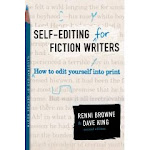
There are many good books out there on this subject, especially Self-Editing for Fiction Writers  by our own Dave King. All I’ve done is break the process down into one I could replicate with any manuscript. What are some tricks you use when you’re in the editing process?

Monday, August 16, 2010

Getting Ready to Write: A Special Person


Much of becoming a proficient writer is based upon experience (actually doing the writing) and on learning the craft of writing. However, it is difficult to see our own writing with the same clarity that an outsider can see it. So, there comes a time when we need to seek advice from others.
            Many writers turn to their spouse, lover or best friend. While this person may have our best interests at heart, he or she (unless also a writer) will rarely have the insight we need to make our writing better. So what is a writer to do?
·         Join a writer’s group. Check your local library, check the listings in the Arts and Humanities section of your newspaper, or check the Internet to see if a writer’s group exists in your area. A good writer’s group will consist of at least one or two people who are knowledgeable in the art of writing and who are interested in sharing that knowledge with others. The members of a good writer’s group will be constructive in all criticism, and never sarcastic, egotistical or jealous.
·         Create your own writer’s group. Join up with a couple of your writer friends and meet regularly to review one another’s work. Use the same precautions in creating this group as listed above.
·         Take a Creative Writing class at your local college.
·         Attend as many writer conferences and workshops as possible. Again, pay attention to notices at libraries, art centers and schools for information about upcoming events. Also watch for advertisements in writing magazines or scan the Internet.
·         Submit your writing for a professional edit and critique. Find these services in the classified section of writer magazines or by scanning the Internet for “manuscript critique.” These services most often charge, and the rates can vary greatly. Some things to look for: does the fee include both line-by-line editing and an overview critique? Are follow-up conferences provided? Are references available? What are the qualifications of the provider? Do you feel comfortable with the person?

            In the best of all worlds, every new writer would have a special mentor—someone who is knowledgeable in the art and the craft of writing, someone who has already gone through the growing stages, someone who has a special interest in the new writer, and someone who is willing to encourage, challenge and teach that new writer. Keep your eyes open, and don’t be embarrassed to ask.

On the left sidebar you’ll find numerous recommended writing groups and sites. You’ll also find high quality editors on this blog (namely Darlene and Edie who work hard to teach everyone here the craft).

Have any of you started a writing group, joined a writing group, or are looking for a writing group? Please share your experiences and suggestions with us!

Monday, August 9, 2010

SETTING: GETTING THE DETAILS RIGHT


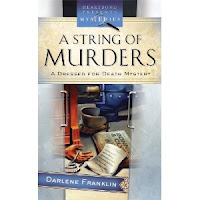
Before Darlene gets started, I'm going to interrupt this post to announce that Darlene Franklin's book A STRING OF MURDERS is a finalist in The Carol sponsored by ACFW! CONGRATULATIONS, Darlene!


***

When a reader picks up a book, she enters into a silent pact with the author. I am willing to believe in your fictional world, as long as you make it real. Don’t say or do something that makes me remember this is just a work of fiction.

I was reminded of this while listening to the radio the other day. One DJ said, “I’m going to spend a week on the beach in Maine.”

If I had read that line in a book, the author would have lost credibility with me. Because I grew up in Maine, I know that while it has some beautiful beaches, most of its more than 2,000 miles of shoreline consists of a rugged, rocky coast. The same thing happened in a book where an author named a town in Colorado “Maple Gap.” A strange thing to name a place in a state where maple trees aren’t common. Other than that, the book was wonderful, but it made me wonder: does the author know her setting?

I even made the same mistake myself, misnaming the river that flows through San Antonio in my first book, Romanian Rhapsody. Oops. For every person who pointed out my mistake, ten must have noticed and lost a little faith in me as a writer.

How do you keep the reader in your fictional world?

• Get the physical details right. If possible, visit the place, so you can experience it with all five senses. Study it online, through books, first hand accounts. Talk with people who have been there.
• Get the words right. This applies mostly to historical novels. In my current work in progress, I discovered that “scat” was used in 1845, but that “squishy” didn’t appear until 1847. This also applies to fashions, machines, and items of every day life.
• Get the characters right. In my current WIP, my hero looks at the heroine, thinking she looks like an angel. I added a great punch line. “Satan was an angel of light, he reminded himself. Don’t let her looks lead you astray.” The problem? She has done nothing to suggest she will lead him astray, nor have I portrayed the hero as paranoid about women. I have to rethink that line.
• Keep the details consistent. If the heroine has green eyes in the first chapter, don’t change them to hazel in chapter ten.

I would love to see examples of setting in your writing. Send a paragraph or so description and let us savor a different time (if applicable) and place. Below are two snippets of my recently released book, Prodigal Patriot, a historical romance set in northern Vermont.

Josiah brushed at the mosquitoes that buzzed around any exposed patches of skin,
far worse here than in Maple Notch. Transporting Van Dyke to his home via Lake
Champlain had seemed like a good plan when Solomon suggested it. On the water,
Josiah wasn’t so sure. Every insect in two states decided to feast on them en
route. . . . .


Van Dyke guided them through milfoil and water chestnuts
toward the bank, where trees grew so dense Josiah didn’t see how even a fox
could squeeze through. The canoe glided underneath the cool canopy, the lake
only a slender line of blue through branches blurred by foliage.

Monday, August 2, 2010

Organizing Your Days on a Weekly Basis

A lot of writers ask me about my writing schedule. As a full-time writer, I have multiple streams of income so I have to manage my time carefully. But it doesn't matter whether you write as a calling, a hobby or a business. We all perform better when we have expectations and a way to judge results. For those of you just starting out, here are some suggestions.

  • Set small, measurable goals
  • Under estimate the time you'll be able to put in
  • Adjust your goal setting to a weekly mode, rather than daily
  • Weekly Word Count Goal
One of the things I've found most helpful when setting word count goals is to set my goal for the week rather than the day. I still have two teenagers in and out of the house so sometimes life interrupts life. To combat this, I set a weekly wordcount goal for my fiction endeavors. Then, I break it down into daily totals. If I miss a day's goal, I can make it up later in the week and I don't wind up feeling like I've failed.

Weekly Project Goal
some of you may work on more than just a novels. You may also work on smaller projects, like articles or devotions. If that's the case, try to set a goal of one devotion or article a week, instead of a word count for those projects.

Revolving Weekly Goal
You might want to try something I call a revolving weekly goal. This is where you have a different goal every week for 3 weeks and then it starts over. The first week you might complete a small project. The next week, you look for markets where you can sell it. The third week you might spend learning about the craft of writing. Then you begin the cycle again.

Whatever method works for you is the BEST method.

Just remember, that no matter how early or how far along you are on your writing journey we all need to spend time studying the craft of writing. That can be done through reading books, attending a seminar or conference, or reading blogs and websites.

All of these are necessary for us as writers to improve our craft.

So what have you found works best for you? Share your insights with the rest of us - please!