Thursday, December 15, 2011
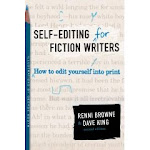
Christmas Gift Certificate for a Detailed Edit!
Sunday, November 6, 2011
PAM'S POINTERS
Sunday, October 16, 2011
Pantser or Plotter?
At our AAWC (www.anauthorworld.com) meeting yesterday, we talked about whether we were pantsers or plotters. These are individual writing styles. Which are you?
A pantser writes by the seat of his pants -- he just sits down and starts writing, without a plot or knowing exactly where he's going. He allows his characters to dictate where to go; he loves the spontaneity of his writing.
The pros of this type of writing is the freedom it allows. You don't have to have anything more than a vague idea in mind before you start writing. You can allow emotion and intuition to guide you, rather than a formal outline. You can go off on as many rabbit trails as your heart desires. Most beginning writers start off this way, and many professional writers still do this. Any outline they might have, they keep inside their head. Pantser feel this style of writing gives them the most creativity.
The problem with this kind of writing? Well, you might wind up with a rambling story and confusing plot. It may be overwhelming, especially for a beginning writer, to revise and fix. The inconsistencies and logic flaws can snowball into a huge amount of revision work. It's easy to get writer's block because you don't know where you're going with the story. You'll have pages and pages that you'll have to discard because they don't add to your story (even if they were fun to write).
The problem with this kind of writing? Well, you could wind up with stale prose. All the creativity went into making the outline. Sure, you can write faster, but is the emotion still in it or has it all been drained out? Your brain thinks it's already written the story because of the detailed outline. You write fast because you just want to get it over with; the love is gone. You can feel confined to following the outline, even though your characters and your heart tell you to change course.
And then there's the plantser: that's someone -- like me! -- who outlines her story ahead of time, but not in such detail that she becomes chained to it. I do a detailed character sketch ahead of time, so that I know my characters very well. Then I use my characters to dictate my story. I know my beginning, my ending, and all the major plot points in-between. But since I haven't outlined my entire novel, I have the freedom of letting my characters dictate much of the story. However, I don't let them change the major plot points or ending, unless I realize that their way is better It's not always -- sometimes it's just a fruitless rabbit trail they wanted to follow, and I have to know this and stop it before I spend too much time and energy going in the wrong direction.
So which are you? A pantser? A plotter? A plantser?
Whichever one you are will depend a lot on your personality. For some people, writing any type of outline just kills their creative spirit. For others, they are totally lost without their guide map, their outline. There is no one right way. I have successful, multi-published friends in each catagory.
So which are you? It doesn't matter, as long as you sit down and write.
If you need help with your writing, feel free to contact me at pam (at) anauthorworld (dot) com.
Monday, October 10, 2011
8 Ways to Beat Post Conference Blues
- They were just being polite—they didn't really like my writing.
- They don’t really want me to send in that proposal.
- hey’ll never publish that (article, devotion, whatever) they told everyone to send something in.
- Give yourself permission to feel deflated when you get home.
- Arrange your schedule so you have a few days to recuperate.
- Pamper yourself. Sleep in, go out to eat, spend some much needed time with family.
- Before you dive into conference generated work take time to evaluate what happened.
- Make a list of things you want to accomplish over the next year, next six months and next month.
- Develop a plan to stay in touch with new friends and contacts.
- Reach out to others who may be feeling the same way.
- Take your next steps in small increments.
Sunday, September 25, 2011
USING SCENE AND SEQUEL AS CHAPTER HOOKS
Monday, September 12, 2011
Conference Etiquette
- Seriously pray about and consider who you should meet in faculty appointments. Don't just take an appointment because there's an opening. I did that the first year. Signed up to talk to just about everybody-even if I had no intention of ever writing what they'd be interested in! Wasted my time and theirs.
- Be on time for your faculty appointments and be considerate when the faculty member says the time is up. I think most instructors are like me and try to stay on schedule in fairness to all those with appointments.
- Listen more than you talk. Like many others, I tend to talk too much when I'm nervous. And before I learned this lesson, the less I knew, the more I talked! The best use of your time is to make a short introduction, tell a little about your experience, ask a sensible question, and then listen. Don't plan your next question while the person is answering the one you just asked. Really listen. Take notes if necessary. Follow up with other questions as time allows.
- If you're getting a critique, don't defend every point the critiquer makes. If you do, you're wasting valuable time you could be using to learn. Of course, you may have questions you need answered for clarification, but don't argue or rationalize every point. Sincere questions are one thing, continually being on the defensive is another.
- Realize that instructors will most likely be unable to take your manuscript home from the conference. Remember, you're one person. Multiply that by 300-400 students. If they are interested, they'll give you instructions for sending it to them.
- Faculty members love to eat with students, answering questions and giving encouragement. But don't hog the conversation at meals. Occasionally there are those who dominate the conversation, treating the opportunity as one-on-one time. Not good.
- One more thing about meals with faculty: It's really nice when they can get a bite or two of food in.
- Be considerate: Don't shove your manuscript in their faces in the restroom. Don't interrupt a conversation or break in line to speak to someone. Don't bad mouth one instructor to another. ;-)
- And a common courtesy that's often missing in our culture today: thank you notes. Handwritten ones are especially nice, but email ones are certainly acceptable. I cringe every time I think of those kind people who invested in me...and yet, I never even wrote a thank you note. Sadly, that wasn't something that I was taught as a child, and I didn't even take such notes seriously until someone mentioned it regarding conferences. Now I try to write notes to everyone who does a kindness to me. Sometimes I forget, but it is something I want to do. They've invested time in me. The least I can do is invest time to write a note.
Sunday, September 4, 2011
Decisions, Decisions, Decisions
We all know how important the right decision is. The more important it is, the more time we take to process all the information we know that concerns that decision. Your character has reacted to the last scene's disaster. He has realized his dilemma of not knowing what to do next. After weighing all his options, he now makes a decision. And, yes, this is a very important decision!
Be sure to make your character proactive, that he actually makes the decision and that one is not forced on him (making him passive and not as interesting). Give him options, but don't make any of them easy. The more risky the decision, the more intensely involved is the reader. This is another way to raise the tension.
However, be sure that the decision is workable, even if the percentages are small (otherwise, you paint yourself into a corner). Now the reader is forced to turn the page to see if the decision is the right one and if it will work.
Remember:
*Goal
*Conflict
3 parts to a Sequel
*Reaction
*Decision
Scene and Sequel work together to move your story forward. Next time I'll show you how to use Scene and Sequel in all types of fiction.
Visit AnAuthor World's website (www.anauthorworld.com) for information on our fall writing conference, The Story Continues. It will be Saturday, October 15, 2011, at Furman University, 3300 Poinsett Highway, Greenville, SC. If you have questions about the conference or just writing questions in general, feel free to contact me at pam at anauthorworld dot com.